The Corporate Capture of Live Music
Who Wins and Who Loses in a Ticket-mastered World?
Victoria Yusupov
October 2, 2026
The Corporate Capture of Live Music:
Who Wins and Who Loses in a Ticket-mastered World?
The queue opens. Within seconds, there are tens of thousands of people ahead of you. The countdown hits zero. The page refreshes. Then, it freezes.
You wait. You refresh again. Maybe the site crashes. Maybe you get kicked out and have to start over. Eventually, you make it through.
And then, you see the price: $1,000 for a concert ticket that, minutes earlier, cost much less.
“I can confidently say I have had an issue every time I’ve attempted to purchase concert tickets,” said avid concertgoer Renee Paulraj.
“Ticketmaster has transformed what should be enjoyable and exciting into a stress-inducing and disappointing experience.”
Paulraj was hoping to buy tickets to Noah Kahan’s show. But making it through the queue is only half the battle. If fans like Paulraj miss initial sale rounds, they are greeted with increasingly high prices, and a resale market that drives them even higher.
“I’ve come to accept that if I can’t get tickets during a presale or general public sale, I’m basically out of luck,” Paulraj said.
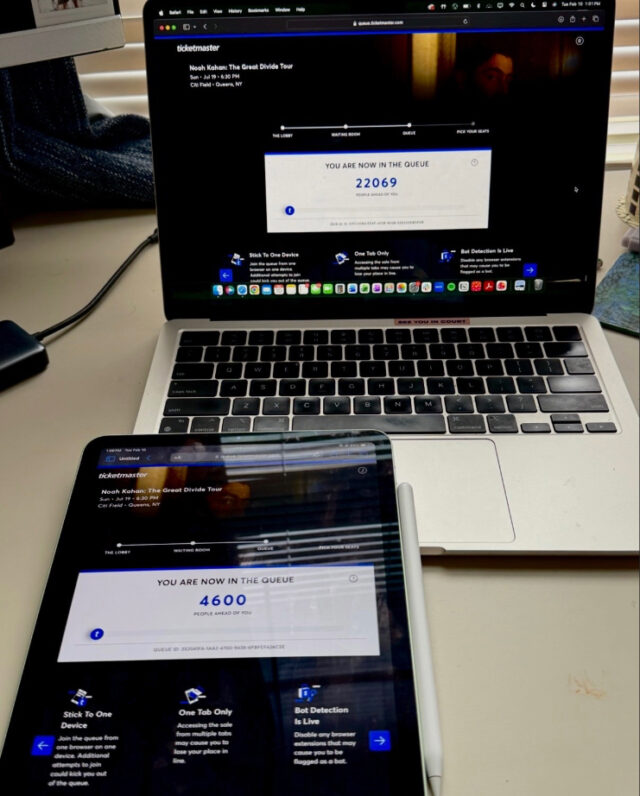
Image provided by Renee Paulraj.
Because Ticketmaster controls roughly 80% of major concert venues’ primary ticketing, fans are left with hardly any choice but to continue navigating a pricey and frustrating ticketing system.
Paulraj’s experience is not unique. Across the country, access to live music is becoming increasingly limited by cost and availability. Attending concerts has ultimately become a luxury that only few can afford.
What impact does the diminishing access to live music events have on our society? Who loses the most, and who are the winners in a Ticket-mastered world? The shift toward higher prices and limited access is not incidental, but the result of a system shaped by corporate control. It is system that benefits from rising costs and limited access, leaving both fans and artists worse off.
An era of exponential increase
The Wall Street Journal dubbed 2023 “the year of the $1,000 concert ticket.” But just how dramatic has the rise in ticket prices actually been?
According to PollStar, the leading trade publication for the entertainment industry, concert ticket prices have risen by 428.7% since 1996, climbing from about $26 to approximately $134 today. If prices had simply kept pace with inflation, the same $25 ticket would cost roughly $52 today—nearly one third of what fans now pay on average.
The sharpest increases have occurred in recent years. In 2021, the average concert ticket cost about $78. Adjusted for inflation, that same $78 ticket would be closer to $95 today, meaning ticket prices have seen an average increase of over 70% over the past five years.
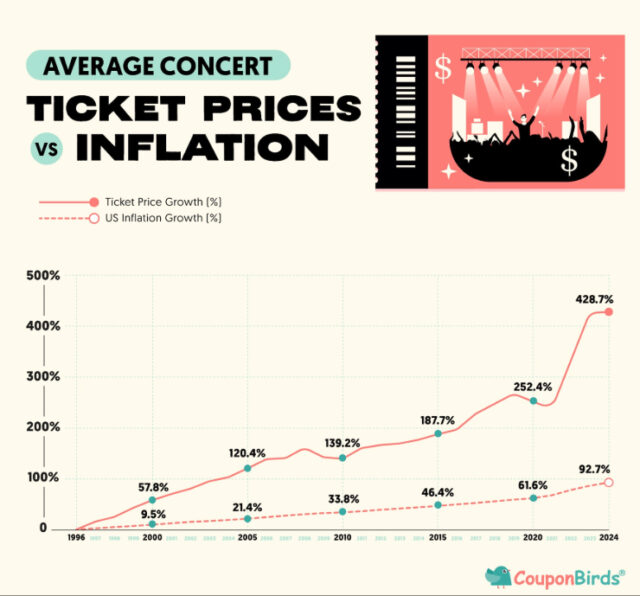
Screenshot taken by Victoria Yusupov from CouponBirds
For many fans, securing tickets during the initial sale is already difficult, and the secondary ticket market further exacerbates the problem.
Take Taylor Swift’s Eras Tour, for example. According to Business Insider, the average resale ticket price reached approximately $3,800, compared to an average face value of around $250.
Her 2018 Reputation Tour saw average resale prices closer to $157, meaning resale prices increased by over 2,300% in just a few years.
In response to rising resale prices, ticketing platforms turned to “dynamic pricing,” a model that adjusts ticket prices in real time based on demand. In theory, this was intended to ensure that more of the revenue from high-demand tickets went to artists rather than resellers. In practice, it has left many fans frustrated.
“Art is slowly becoming for rich people only.”
When Paulraj attempted to purchase tickets for the Eras Tour, she found that identical seats could cost entirely different prices.
“My friend who had a better position in the queue was able to purchase tickets in the exact same seat level as me for significantly cheaper,” she said. “My later position in the queue resulted in higher prices.”
Most recently, fans expressed outrage over Harry Styles’ tickets, which relied on dynamic pricing through Ticketmaster. As prices approached $1,000, fans took to social media, sparking broader debate about affordability and access to live music. In the comments of one viral TikTok, a user wrote: “art is slowly becoming for rich people only.”
According to Pollstar, the average ticket price for Harry Styles’ 2023 Love on Tour was $115. That means that in just three years, prices for his tickets jumped almost 770%.
Price spikes like these have been met with considerable backlash from fans. But the problem extends beyond any individual inconvenience, it reflects a broader shift in who gets to access live music at all.
That transcendent feeling
As barriers to accessing live music continue to increase, access to shared communal and cultural spaces is becoming increasingly stratified by who has time and money to navigate the “Ticketmaster wars.”
But this is more than just a few disgruntled fans. These “wars” are taking their toll on American society.
Aside from entertainment value, live music events offer something increasingly rare in today’s world: the chance to gather with others and share an experience in real time.
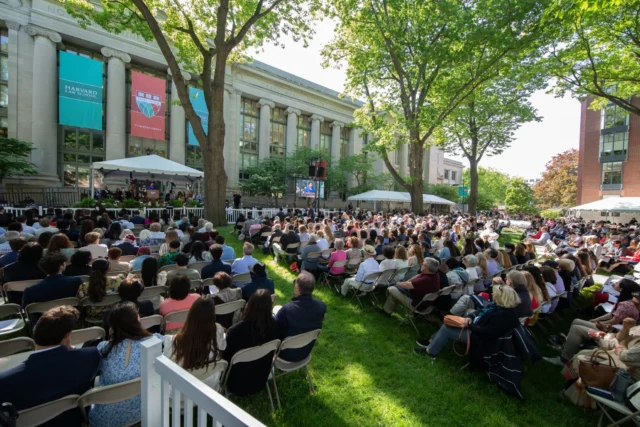
Sociologist Emile Durkheim described this phenomenon as “collective effervescence.” At a concert, collective effervescence is that electric feeling you get when thousands of people sing, dance, and react together as part of one shared moment.
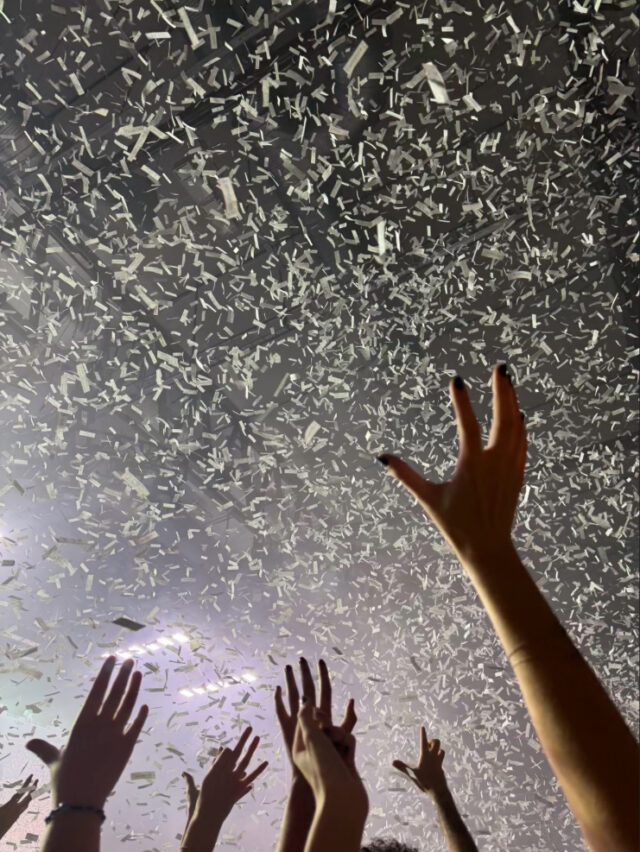
Image taken by Victoria Yusupov.
As sociologist Eric Bjorklund explained, live music creates a transcendent feeling.
“You feel like you’re part of something larger than yourself and connected with the people around you,” he said.
Experiencing music with others, in this sense, is a core social practice. It is not simply passive entertainment, but a central form of interaction through which people build relationships and come to understand themselves.
“We are social creatures. We need that experience,” said Bjorklund. “It helps us realize ourselves as humans.”
The ‘social creature’ loses
In a post-pandemic, politically fragmented, and increasingly digital world, opportunities for this kind of shared, in-person connection have become alarmingly rare. Sociologists often describe this trend as the decline of “third spaces.”
Third spaces are informal gathering places outside of home and work where people can connect and build a sense of community. Research shows that as access to these spaces has declined, levels of stress, loneliness, and alienation have increased. Because concerts function as a third space, their growing inaccessibility may raise concerns about the broader loss of social connection and its potential negative effects on human health and well-being.
Bjorklund explains that even beyond fostering social connection, live music also plays a critical role in building and sustaining culture.
“Culture,” he noted, “is endemic to any civilization, and music is an integral, fundamental part of that culture.”
When access to those experiences is unequal, so too is access to the culture and community they create. Bjorklund described the issue as part of a broader pattern of rising income inequality.
“Consumption is one of the key manifestations of inequality, and it is also a mechanism by which it is reproduced,” he explained.
In other words, unequal access to live music events does simply reflect existing inequalities, it helps entrench them by drawing and reinforcing social boundaries between groups.
“It’s not just a reflection that people have more money than you. It’s also reinforcing the status line, literally, between you and them,” said Bjorklund. “That has real consequences.”
The digital entertainment era
What, then, is driving this growing inequality to access? To begin to answer that question, it is necessary to step back and examine how the economics of the music industry has shifted in the digital era.
Over the past two decades, recorded music has lost much of its value as a source of revenue for artists. In the era of digital distribution, listeners no longer need to purchase albums or CDs; instead, streaming platforms and peer-to-peer sharing made music available at little to no cost.
“In the late nineties and early 2000s, the value of a piece of recorded music quite quickly went from $16 or $18 CDs that you’d buy at Tower Records or Newbury Comics down to basically zero,” Harvard Law School Professor Christopher Bavitz explained.
“We all had ubiquitous access to everything.”
Although streaming platforms like Spotify and Apple Music have partially restored revenue through subscription-based streaming, that model comes with separate challenges.
“The amounts of money that make it through to artists are next to nothing,” Bavitz said.
As a result, artists turned to touring as their primary source of income. But a closer look reveals that even here, much of the revenue does not flow to artists themselves.
Losers, continued: artists don’t benefit either
A common and perhaps intuitive narrative is that artists have significant control over this system and are therefore its primary beneficiaries.
Clyde Lawrence, co-bandleader of the band Lawrence, has considerable experience navigating today’s live music industry. To illustrate how it works in practice, he broke down how ticket revenue is actually distributed through a hypothetical $50 ticket. He explained that ticketing fees, often ranging from 30–40%, can push the final price of the ticket closer to $65 or $70. Those fees go straight to the ticketing company.
“The artist sees none of that,” Lawrence said. “We didn’t even have a say in that number.”
After those fees are taken out, additional cuts are made by the ticketing company, venue, and promotor. At the end of the night, the artist may be left with roughly $25 or $26 of the original ticket price. But artists are still responsible for covering the costs of touring, including paying their crew and band, transportation, equipment, and other expenses.